
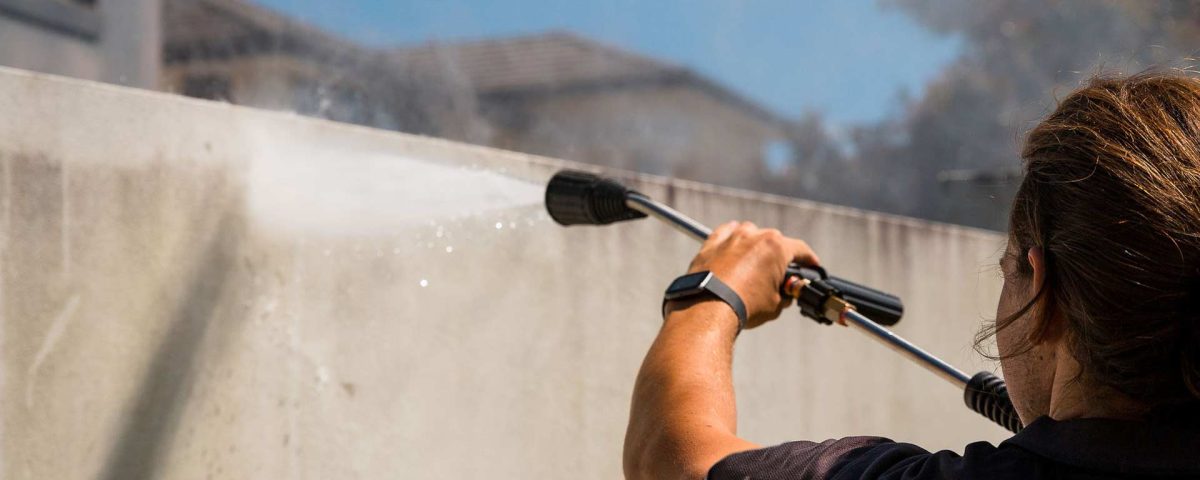
Not everyone knows the difference between pressure and mild washing. However, there are instances where knowing your options for cleaning services is essential, particularly when providing cleaning services. You’ll be left baffled by the sheer number of possibilities available. Render Wash will go over all you need to know about softwashing below, including its definition, advantages, application, timing, and why it’s occasionally the best choice for the job.
Soft Washing Explained
A variety of render surfaces can be cleaned using the softwash render cleaning method (more on that below). When organic growth and organic matter issues need to be cleaned from the exterior of your render surface, this is the best method to employ.
The unattractive green algae growth, crimson stains, and black stains that come with organic waste will quickly turn your house or place of business from a lovely, welcoming space into an eyesore. Black staining on a property’s exterior is particularly uninviting. For this reason, a render cleaning business like ours will come out and clean your render.
Softwash is a low-pressure render cleaning technique that employs biocides and cleaning solution to remove unattractive stains, algae, mould, mildew, and other organic growths without harming your delicate rendered surface.
But why is it so unique?
Key Advantages of Soft Washing:
- It’s delicate but very effective. It’s the difference between using a brick and a soft sponge to clean your fish tank. Soft washing makes cleaning services extremely delicate.
- Produces incredible outcomes. You’ll be able to capture Instagram-worthy before and after photos. To let everyone know who turned your building around, don’t forget to tag us.
- For organic materials, it is a highly recommended therapy. Living things are organic. It is necessary to manage moss, mold, mildew, and green algae.
- Results come quickly. Most renderings may be cleaned so quickly with softwash that you won’t even see us there. We’re there one moment, and then we’re gone the next.
Soft Wash Render Cleaning: What Is It?
What Is the Process for Cleaning Soft Wash Render? Contrary to popular opinion, high pressure washing is not necessary to properly clean rendered surfaces. Actually, using high-pressure jet washing on rendered surfaces would not be a good idea. However, how can softwash clean render if we only use water, low pressure, and mild cleaning solutions.
Let us give you an example of how we could softwash your building to get outstanding outcomes in order to demonstrate our point. (Yes, just like MI5, we will walk you through it. However, it’s not nearly as difficult.
1. Preparation
Render Wash begins with a little preparation, as is the case with any good secret service missions. We occasionally conduct this over the phone, during which you describe your building and the issues you’re having (algae, moss, stains, etc.) so we can get a sense of how we can approach the problem.
Information regarding the building’s size, the number of outside surfaces we’ll be cleaning, and other details about the property are also necessary. This simply aids us in choosing our equipment. For instance, office buildings will require slightly more equipment than a one-bedroom home.
2. Selection of Equipment
The equipment we’ll need for the task are then chosen. We can customize a solution for your building because softwashing uses a mild blend of several cleaning agents and biocides. In other words, we tackle everything when we spray it.
As a render cleaning company, we also provide a variety of treatment choices. Softwashing is sufficient in certain situations. However, if algae growth has gotten out of control, more work may be required to tidy up your rendering and bring it back to its former glory. Check out our post on how to get rid of red and green algae on walls as well.
In this case, steam cleaning could be used to help the softwash. Trial and error is sometimes required while cleaning the outside. Don’t worry, though; we haven’t yet encountered any external walls that are stronger than us.
3. Apply Our Solution
We just spray the building, cleaning render, as soon as we are confident that our solution will work. We wait after spraying every render surface from the ground up, including rooftops if needed. Cleaning the render completely could take some time because our cleaning solution contains several biocides, etc. Waiting fifteen minutes before the cleanup starts usually works.
4. Clean-up Process
We use only pure water to rinse the solution off after waiting for fifteen minutes. In addition to helping to further clean render, this gets rid of any dangerous biocides that could harm the environment if not handled properly.
We handle our provide cleaning services in an environmentally responsible manner. This implies that we can clean while keeping environmental safety in mind. We take every precaution to shield it from our care and make sure to clean up completely before we depart.
Naturally, this entails cleaning the rendering, but we also clean the space around the render surface.
What Kinds of dirt Can Softwash Render Cleaning Clean?
Render cleaning isn’t always simple. The sort of render, the kind of solution you’ll require, and the surface you’re working on must all be considered first. You must first understand the dirt you will be battling.
Additionally, knowing which problems Softwash can handle will help you decide when to give us a call. Thus, the following are the primary areas that softwash cleaning can assist with:
- algae – green algae and red algae
- mould
- mildew
- moss
- lichen
- fungi
- organic stains
- general dirt and messes
Which Substances Are Used to Clean Soft Wash Renders?
Since most of you will also be concerned about environmental issues, we at Render Wash take our commitment to environmental protection very seriously. We’ve already discussed how we take the cleanup portion of our work equally seriously to safeguard flora and wildlife from our work, which should help alleviate your mind.
However, some of you may be curious about the specific biocides, algaecides, and other solutions that we use when cleaning. We’re also transparent.
The primary chemical solutions we employ are as follows:
- sodium hypochlorite
- surfactant
- commercial degreaser
- oxidation remover
- bleach
Not every one of the chemical solutions listed above will be used because we don’t always use the same cleaning solution. And sometimes we can need more subtle ones. You may always ask us on site if you have any questions about the specifics of your project, and we’ll be pleased to walk you through everything we’re utilizing. See our guide on using bleach to clean render.
Is it environmentally safe?
It is impossible to say that chemical remedies are safe for the local ecology. However, we can guarantee that we take all reasonable precautions to guarantee that no harm is done. From applying plant protection treatments where our spray is likely to harm plants to properly and safely handling any waste wash water.
In order to ensure that every surface that might have been impacted by the chemical combinations we used is thoroughly cleansed and the chemical is neutralized, we will clean the surrounding area thereafter, not just your wall.
How to Handle Your Waste Water…
Let us walk you through the steps we take to ensure that the waste wash water is handled appropriately to show you how seriously we take our commitment to your local surroundings. In the UK, it is against the law to let waste wash water into storm drains. Because of this, our waste wash water collection system prevents any drop from going in the wrong direction. Additionally, in order to prevent any damage, we dispose of your waste wash water in accordance with local regulations when we remove it from the site.
Which Surfaces Are Suitable for Soft Washing?
Softwashing can be applied to a variety of renders:
- coloured render
- lime render
- painted render
- white render
- pebble dash
- k rend
- monocouche render
- roughcast
- tyrolean render
Surfaces To Stay Away From…
There isn’t a single render surface that softwashing isn’t applicable to. Having said that, don’t be afraid to contact a member of our staff if you have questions concerning the render on your wall and whether softwash is appropriate for cleaning that surface. Get in touch with us, and we’ll offer you the same kind of knowledgeable, approachable guidance that you’ve grown used to from today’s post!
Is Soft Washing Better Than Pressure Washing?
The age-old dilemma: should I use pressure washing or softwashing?
Important Distinctions in Pressure Washing
In order to comprehend why a pressure washer and render surface are not the best of buddies, you must first comprehend the primary distinctions between the two.
- relies on high pressure
- often uses hot water
- is extremely powerful
- designed for solid surfaces – bricks, concrete, etc.
The Reason Soft Washing Is Better
The goal of softwashing is to gently yet thoroughly clean the render on your wall. The goal of pressure washing is to destroy everything so thoroughly that it hardly recognizes its own identity, object, or location. Do not be misled; pressure washing is one of the most enjoyable activities you can engage in, but it is best avoided while rendering.
Therefore, keep in mind that softwashing is the solution to your filthy render issue if you have a sensitive render, such as monocouche, k rend, tyrolean, or roughcast. Check out our instructions on cleaning roughcast renders as well.
Get in touch…
Call or contact us today for a free quote, or read more about our services.